Braided Ponytail Hairstyles: 25 High, Low and Curly Ideas

Braided ponytail hairstyles can be sleek and sculpted or loose with plenty of movement. These looks range from crown braids and low plaits to high cornrow ponytails, with different ways to wear curls, waves and straight lengths.
Curved Cornrows With Jumbo Braid
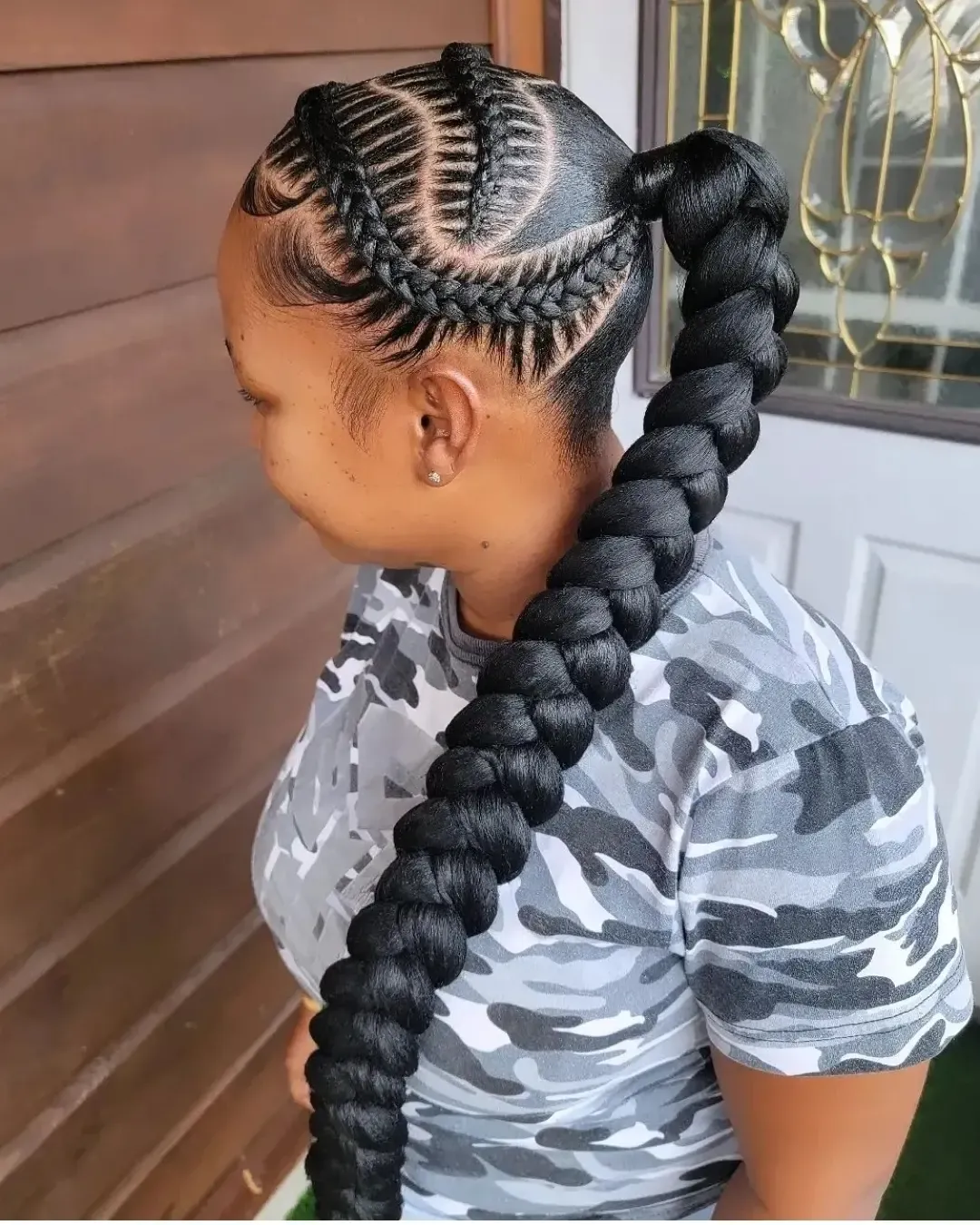
Curved cornrows sweep back into a high ponytail formed from one oversized braid. The neatly divided scalp sections balance the heavy plait, so both the roots and length have a distinct shape.
Style note: The side profile shows how strongly the curved partings shape the finished look.
Braided Crown With Waves
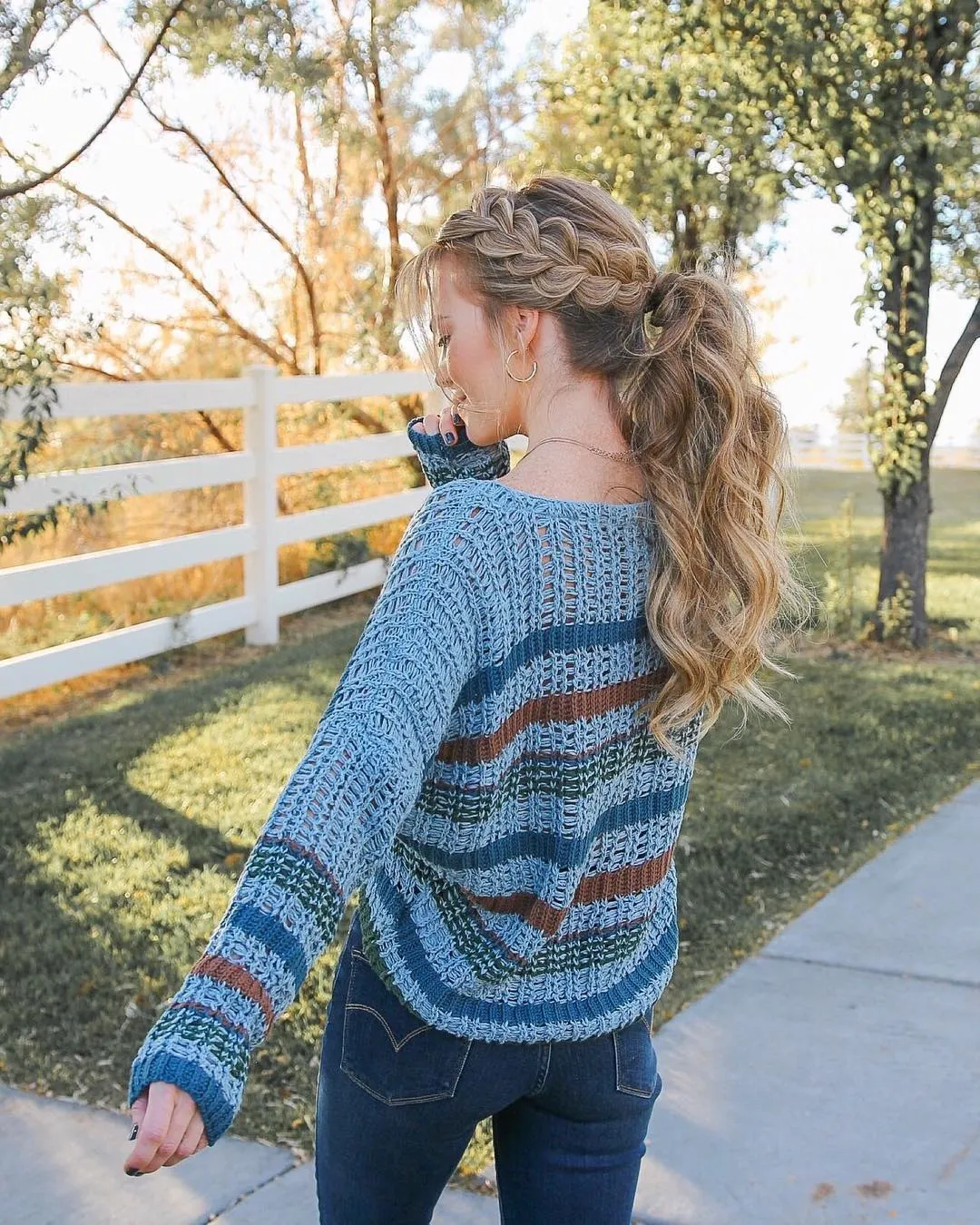
A loose crown braid crosses the back of the head before meeting a softly waved ponytail. The relaxed braid adds texture without covering the movement through the lengths.
Double Crown Braided Ponytail
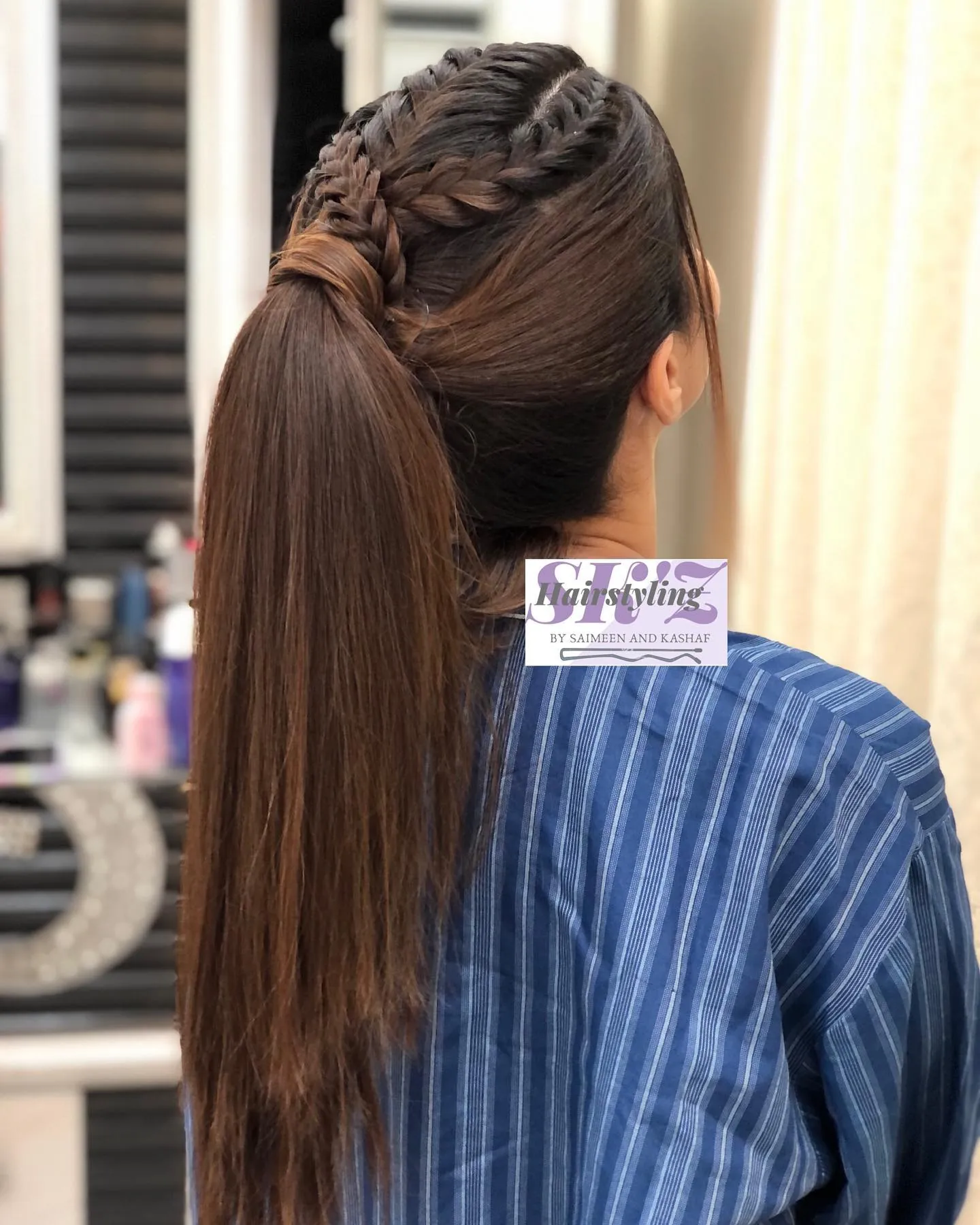
Two broad braids run over the crown and meet above a long, straight ponytail. This keeps the woven detail visible from behind while leaving the tail smooth.
Side Braid Low Ponytail
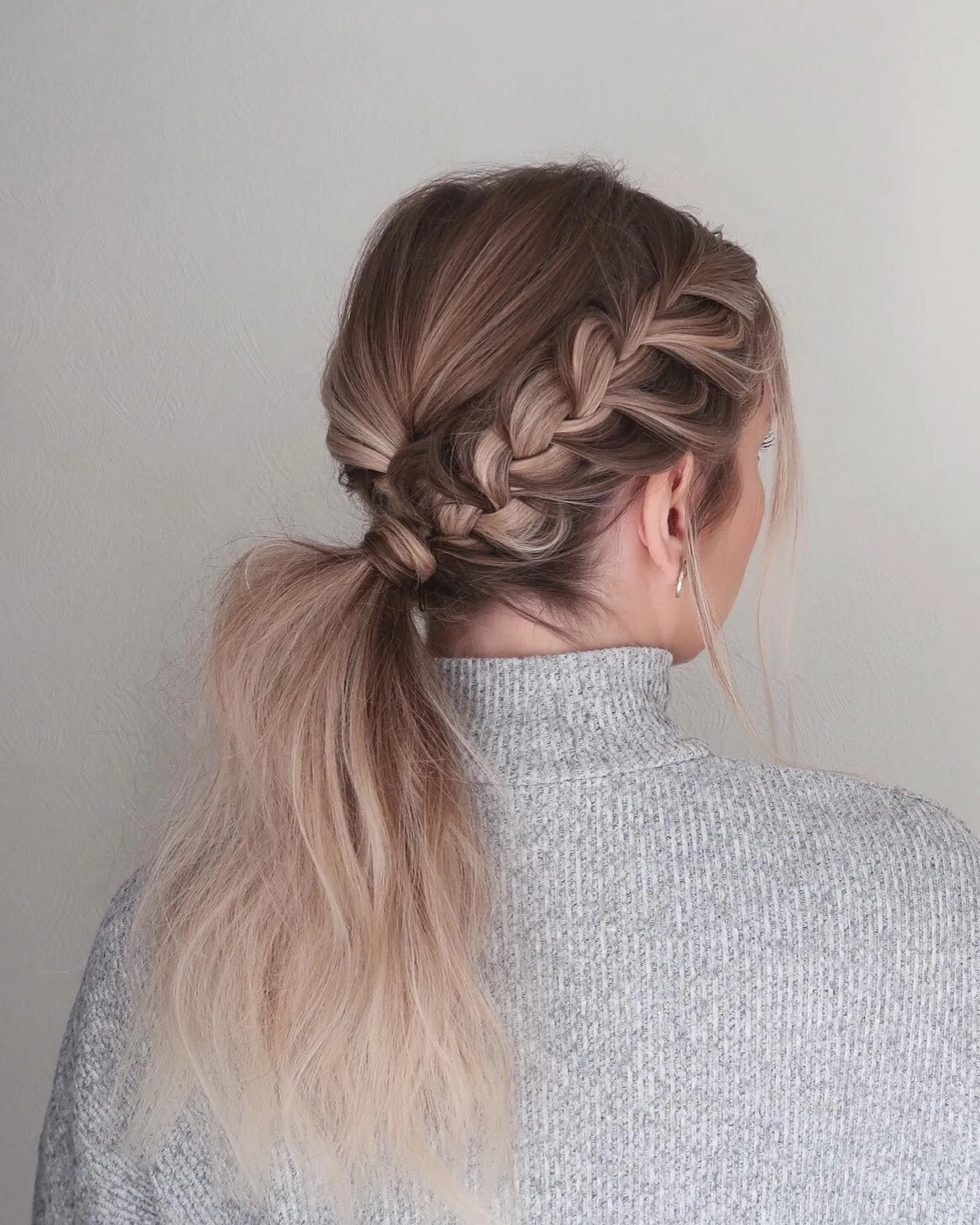
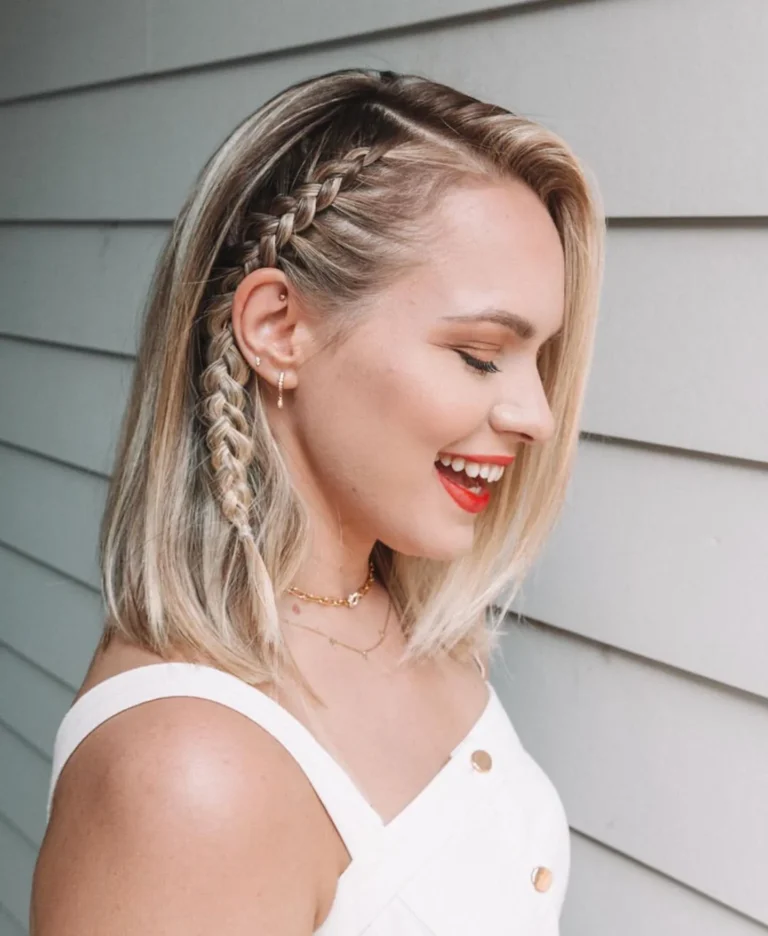
A thick side braid curves towards a low ponytail, leaving most of the blonde lengths loose. A few free strands near the face soften the otherwise defined braid.
Pro tip: Loosen only the outer braid loops if you want a softer outline without undoing the shape.
Fine Braids High Ponytail
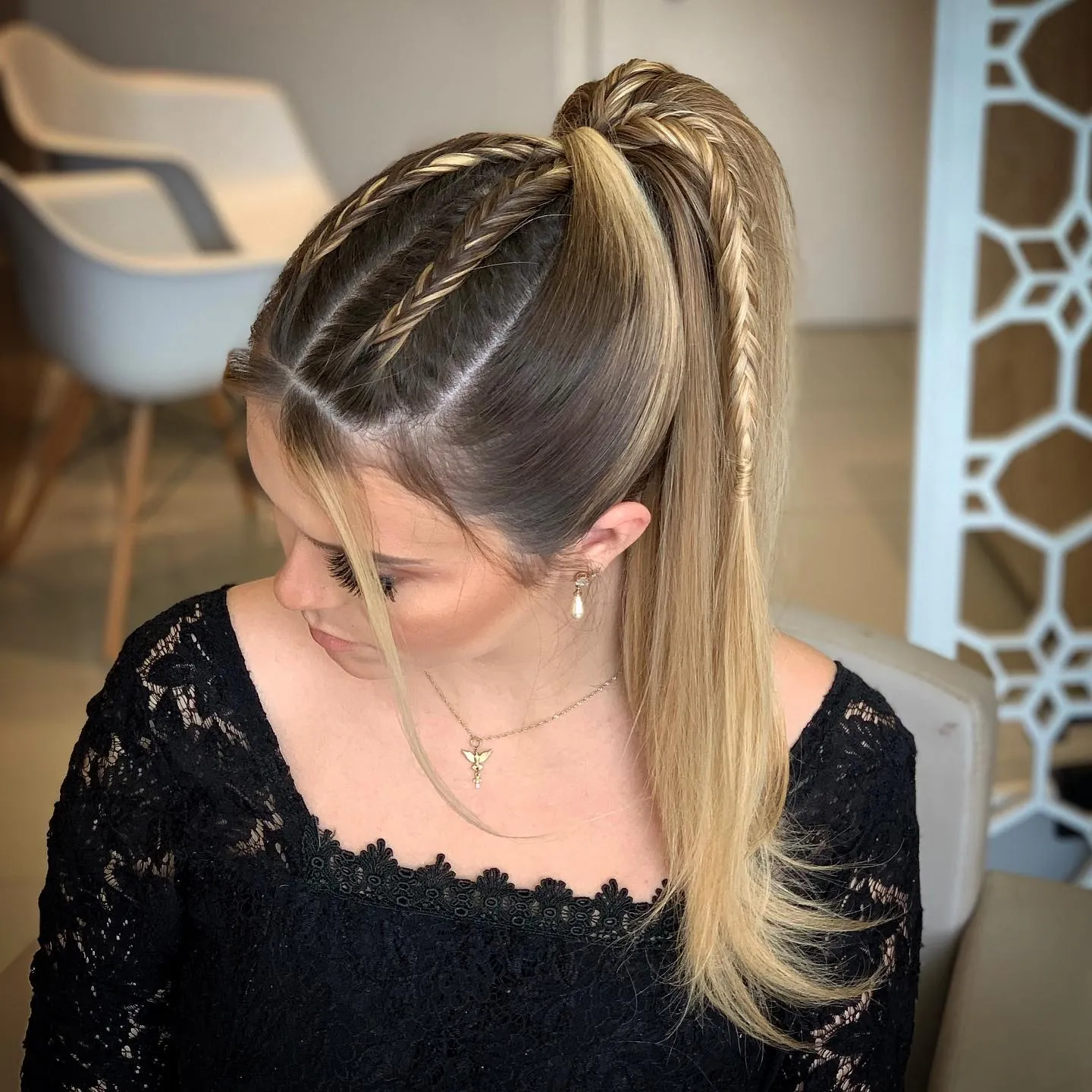
Two narrow braids run towards the high ponytail, with a slim plait continuing beside the loose lengths. The smaller woven details add interest without changing the straight silhouette.
Silver Ponytail With Braids
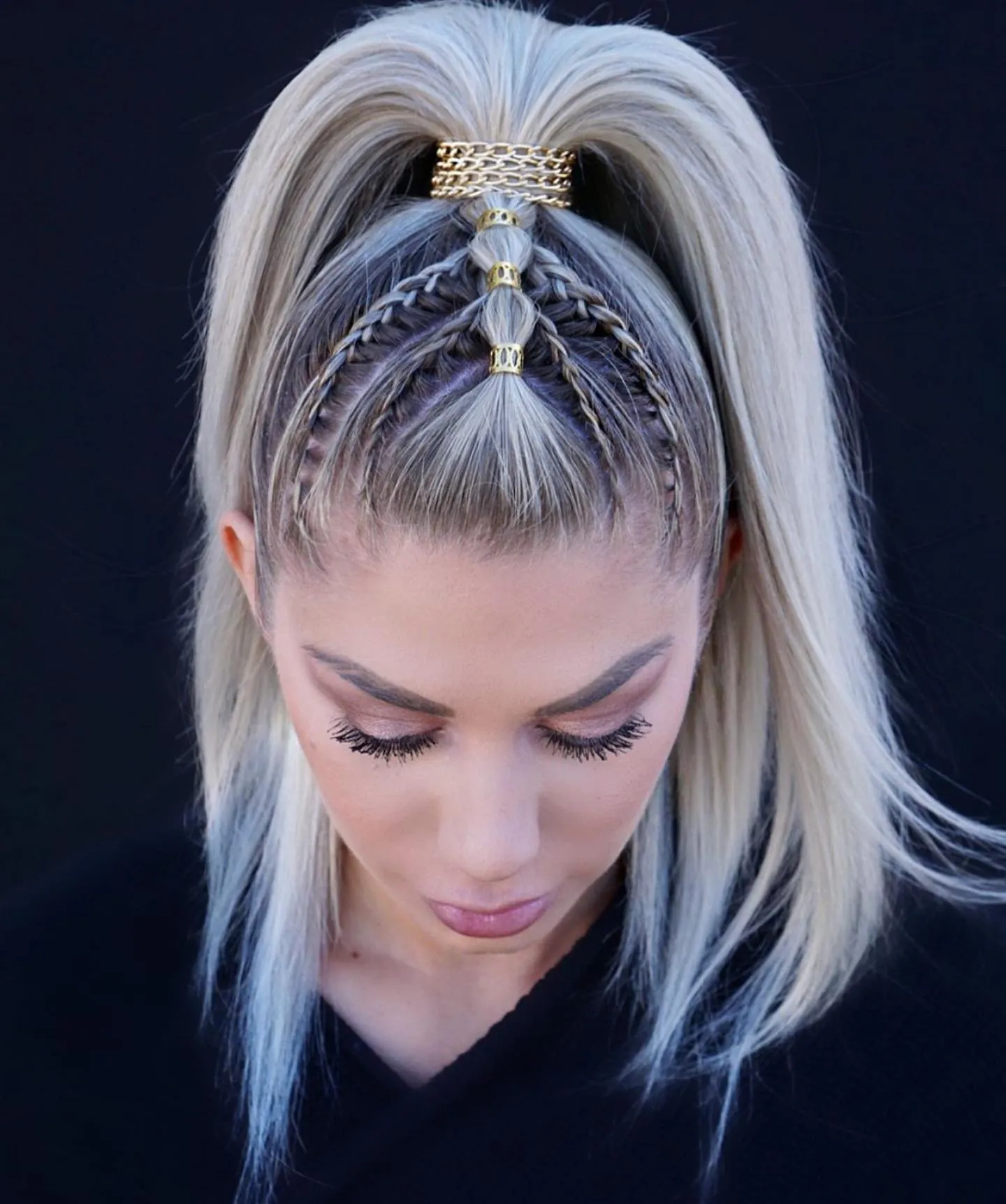
Slim scalp braids frame a central tied section beneath a high silver ponytail. Small gold cuffs echo the larger cuff at the base, drawing attention to the pattern.
Style note: Choose one metal tone for the visible cuffs if you want the accessories to feel coordinated.
Double Dutch Ponytail
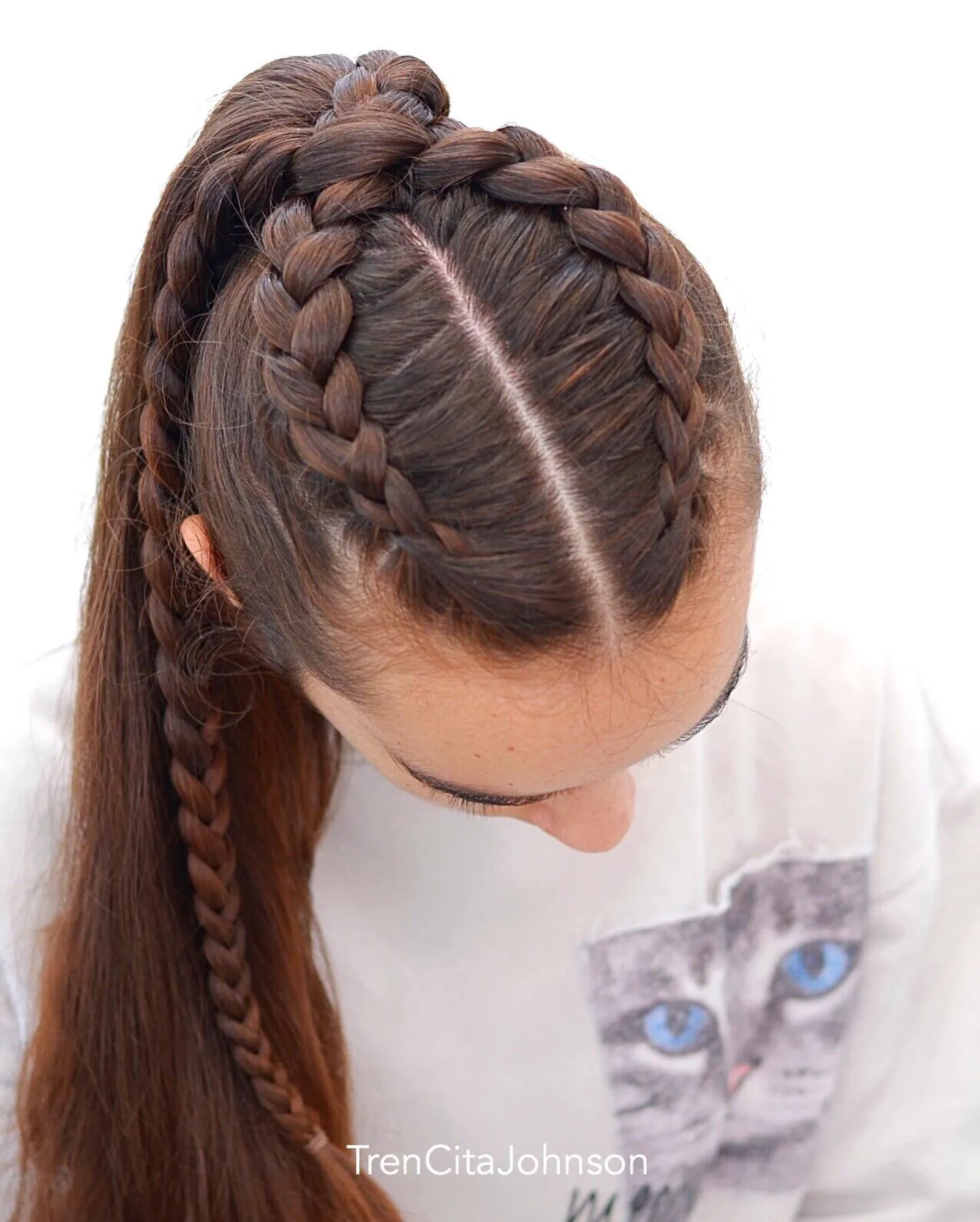
Two raised braids follow either side of a centre part before joining a high ponytail. A narrow plait left among the loose lengths repeats the detail below the tie.
Side Crown Braided Ponytail
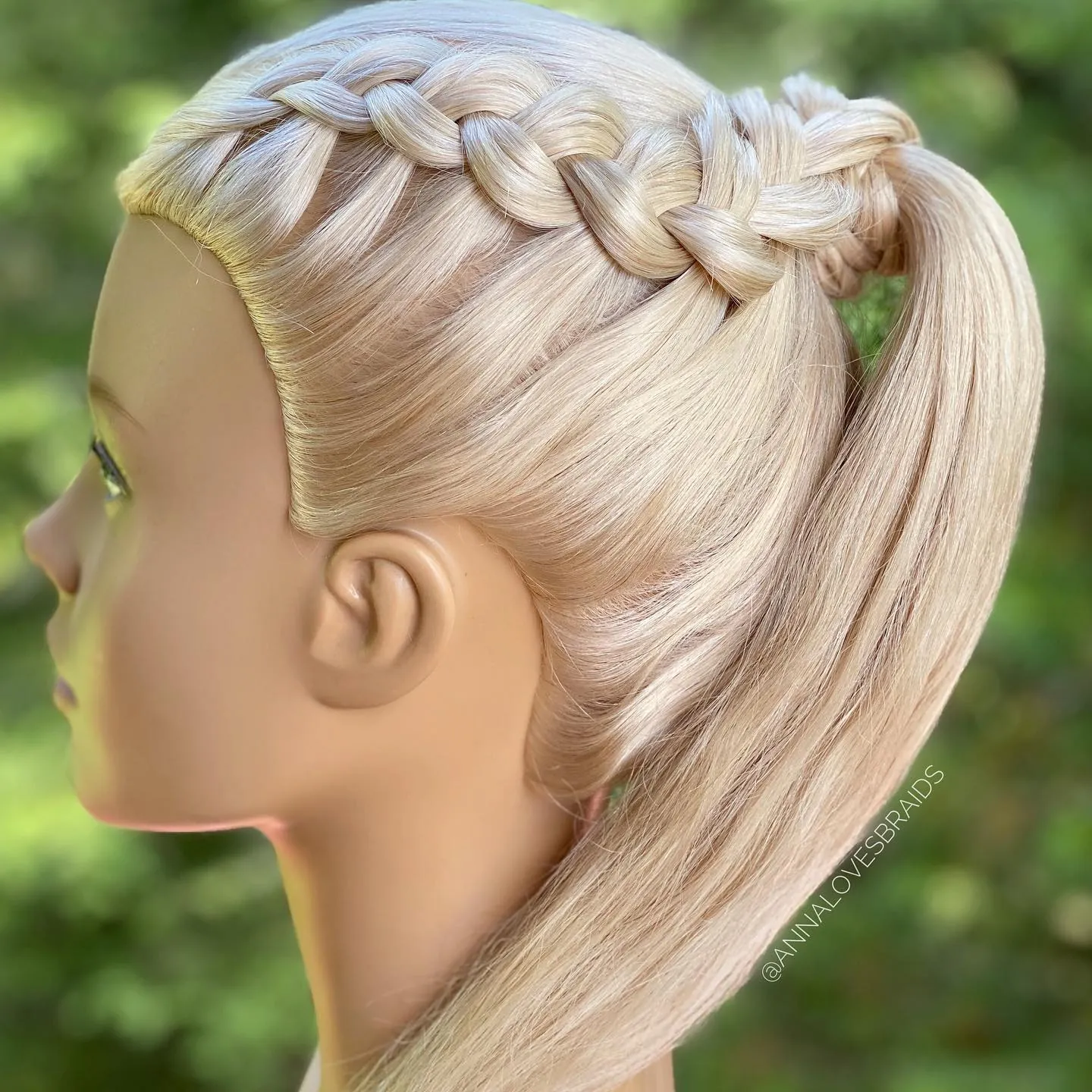
A wide braid follows the hairline into a wrapped detail at the base of a high ponytail. Keeping the remaining lengths straight lets the crown braid stand out.
Loose Back Braid Ponytail
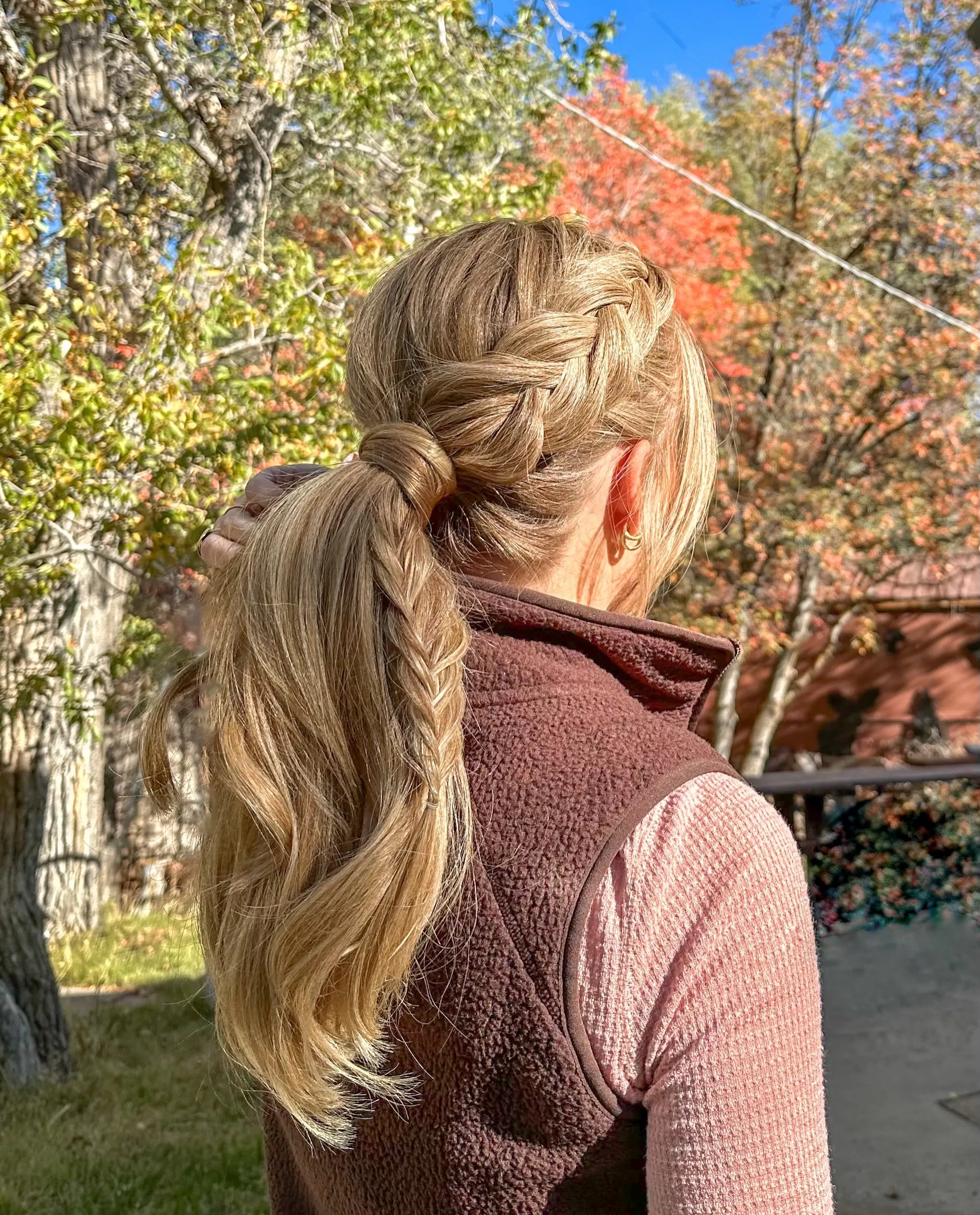
A wide braid travels down the back of the head and meets a loose, wavy ponytail. Its larger loops create a gentler outline than tightly woven scalp braids.
Pro tip: Widen the braid gradually from top to bottom so one section does not look noticeably fuller.
High Feed-In Braid Ponytail
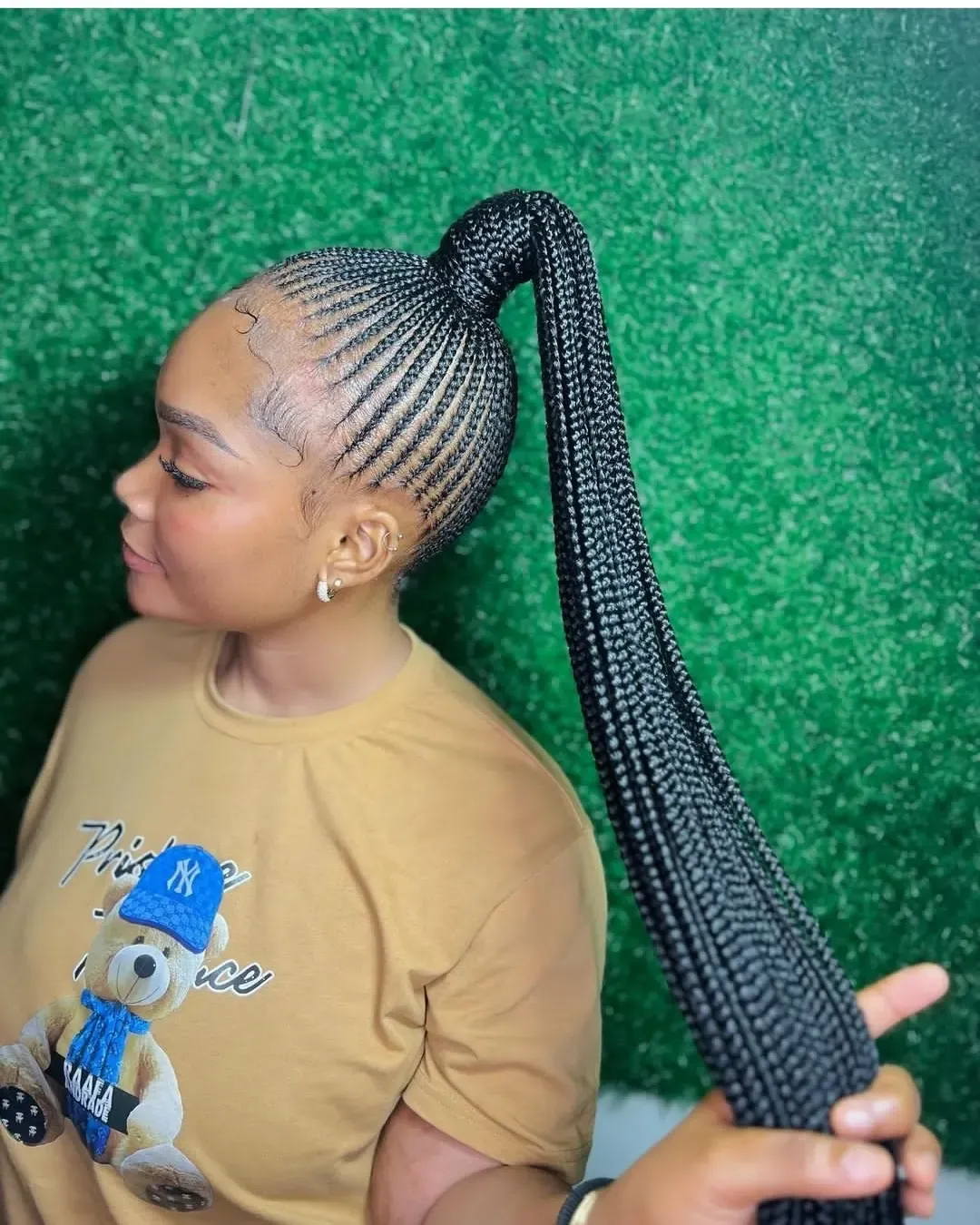
Fine, evenly spaced cornrows sweep into a high ponytail made of long, narrow braids. The raised gathering point keeps the curved scalp pattern on display.
Long Single Braided Ponytail
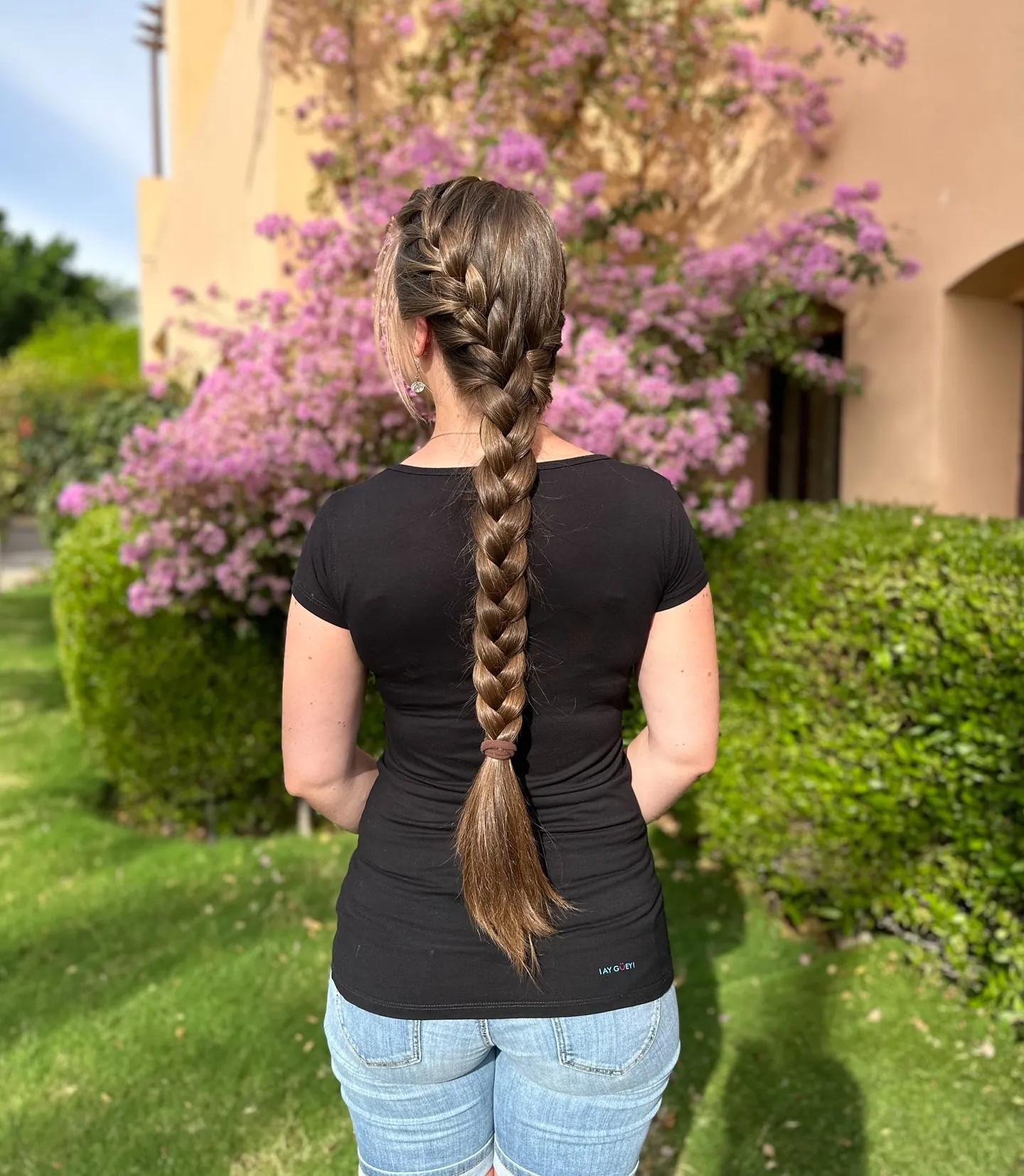
A broad braid runs from the crown into a long plait down the back. Its even sections create a defined centre line, with a slim loose end below.
Woven Low Curly Ponytail
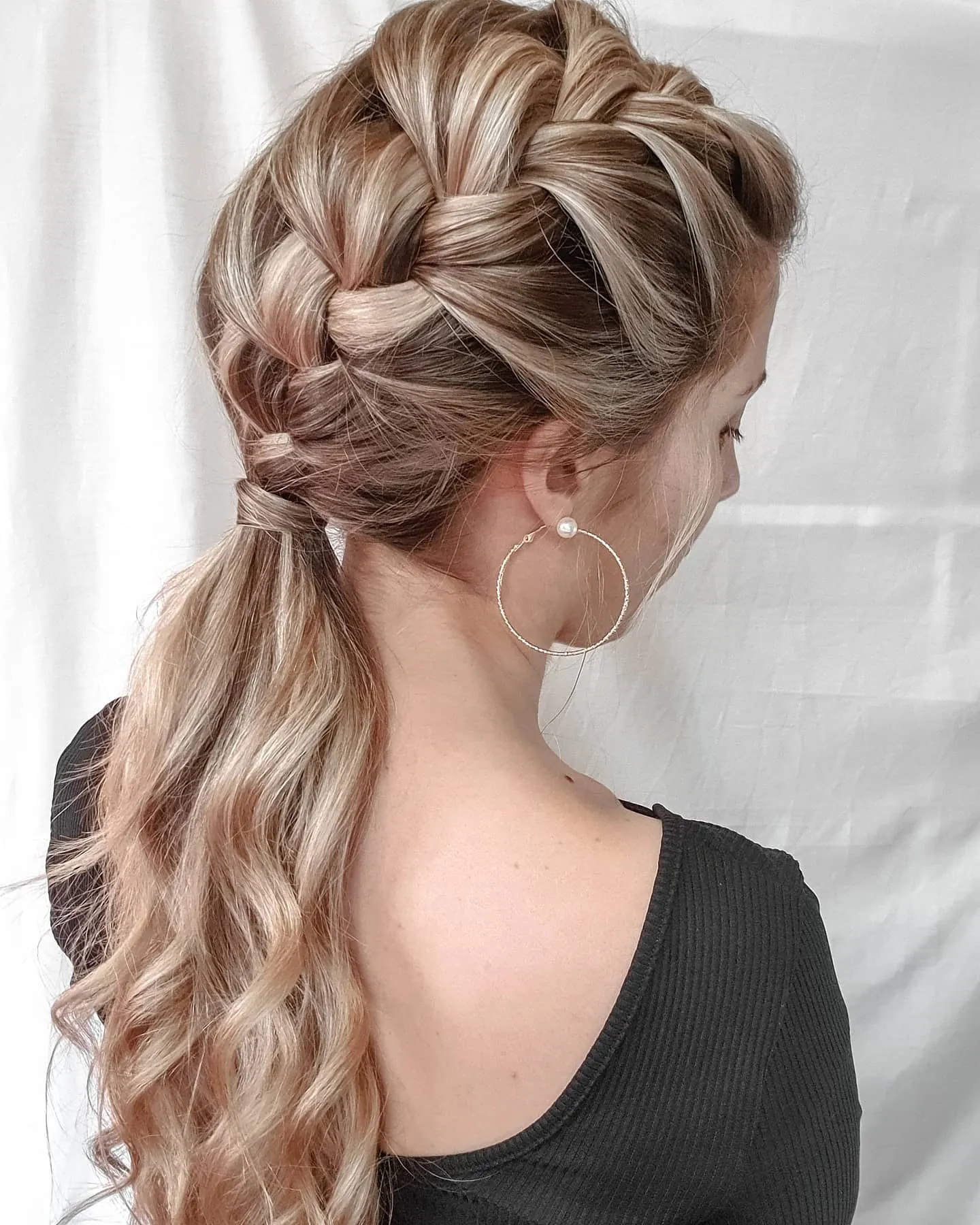
Wide overlapping braid sections build texture across the back before meeting a low ponytail of curls. The contrast keeps the crown structured and the lower lengths softer.
Ask your stylist: Show the back view so the overlapping braid pattern is clear.
Side Cornrows Curly Ponytail
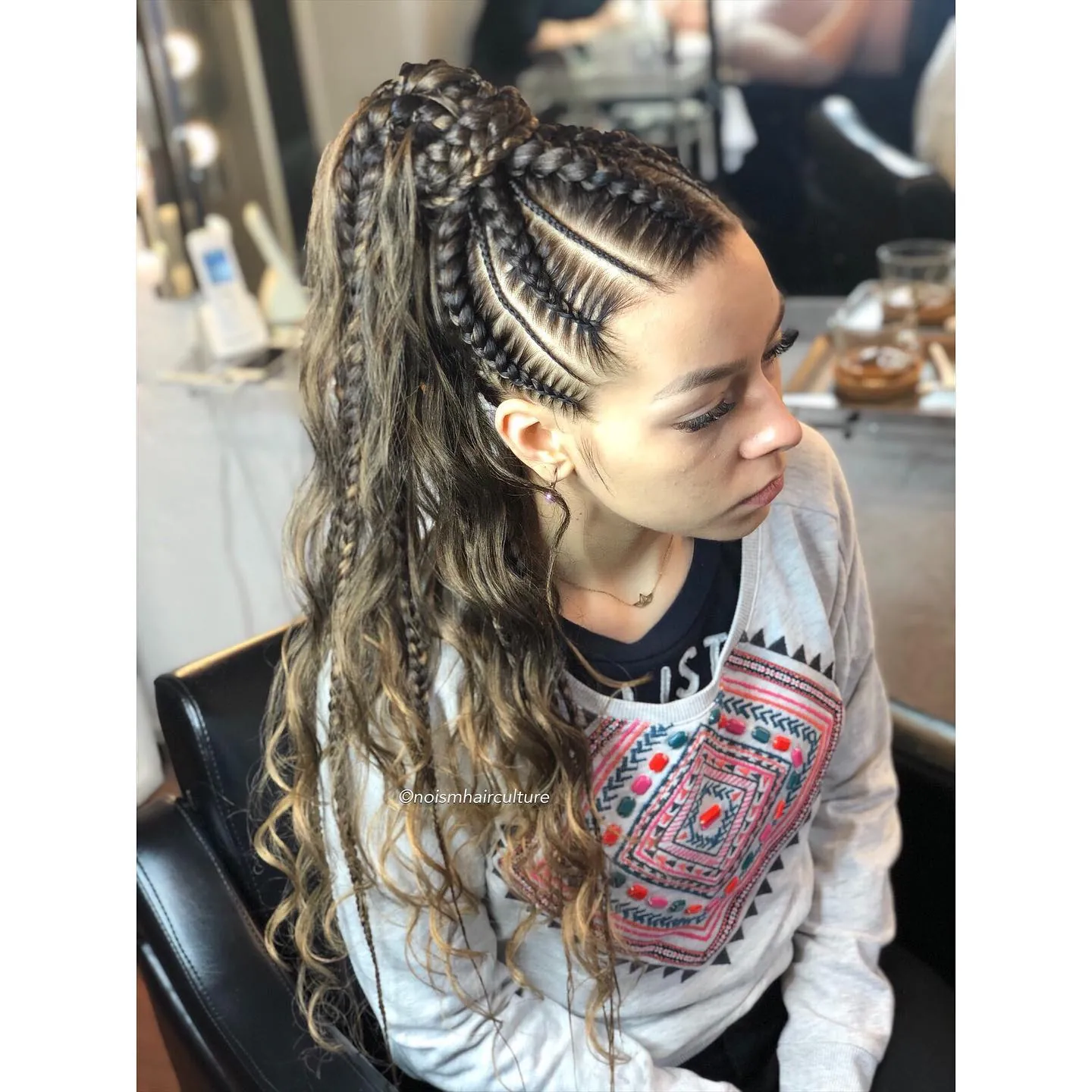
Tight curved braids shape one side of the scalp, while long loose curls spill from the raised ponytail. The change in texture separates the patterned roots from the flowing tail.
Style note: Decide whether you want the loose curls worn behind the shoulder or brought forward, as shown.
Stitch Braids With Curls
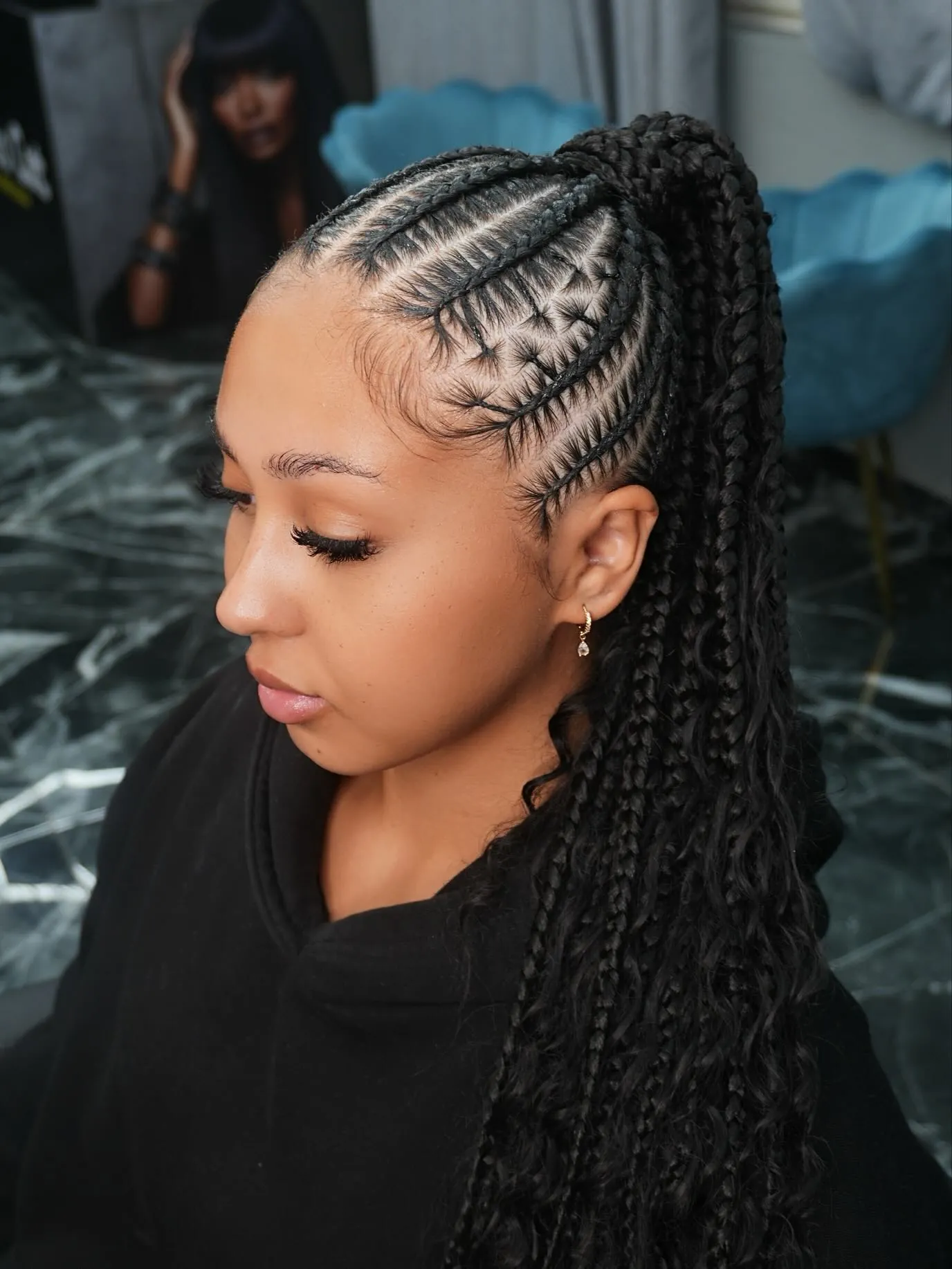
Defined diagonal cornrows lead into a high ponytail with deep dark curls. Leaving the part lines visible gives the smooth braided roots a clear contrast against the fuller lengths.
Pink Oversized Braided Ponytail
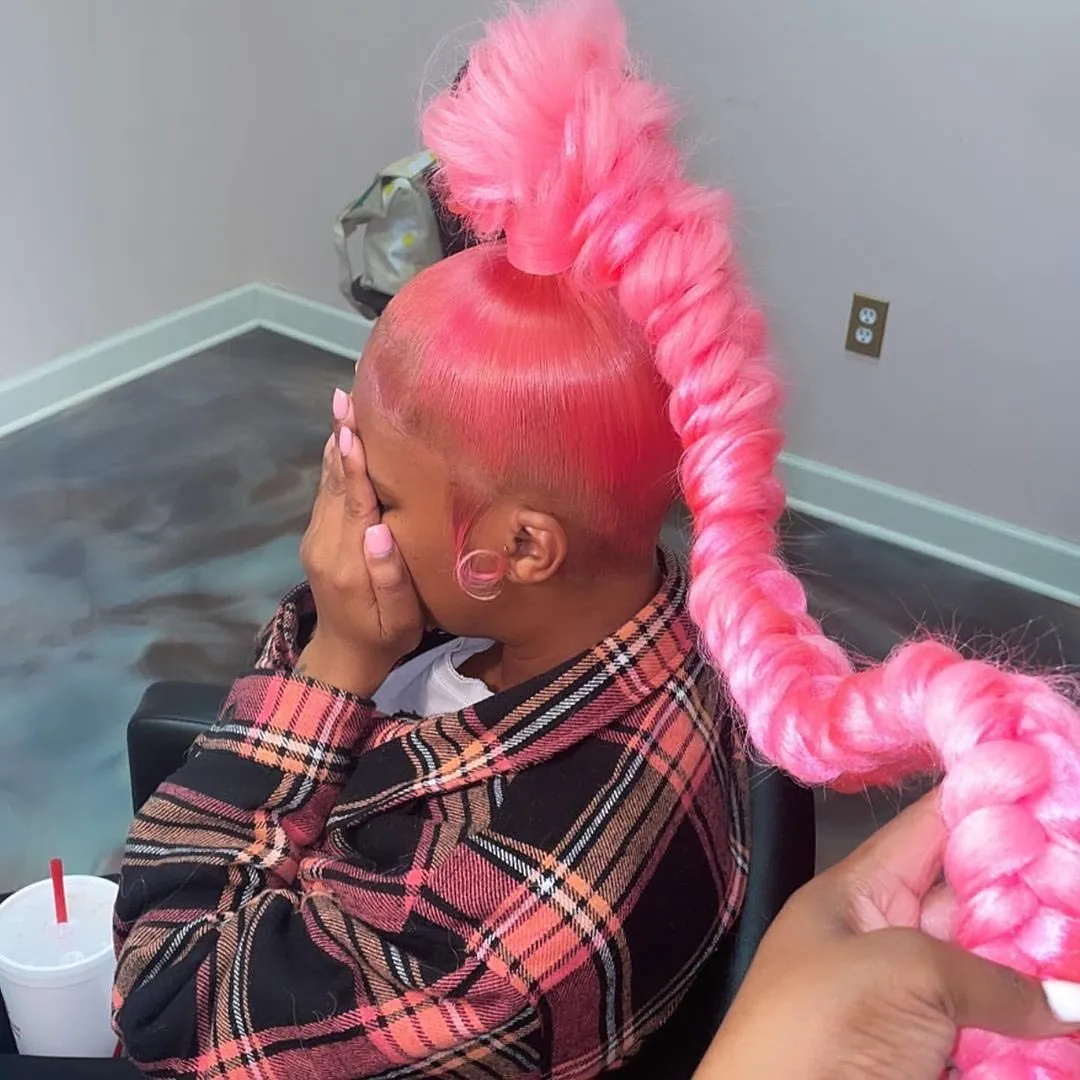
An oversized pink plait starts at a sleek, high base and falls forward in thick sections. The dramatic width makes the braid the focal point without needing extra woven detail at the roots.
Half-Up Braided Bob
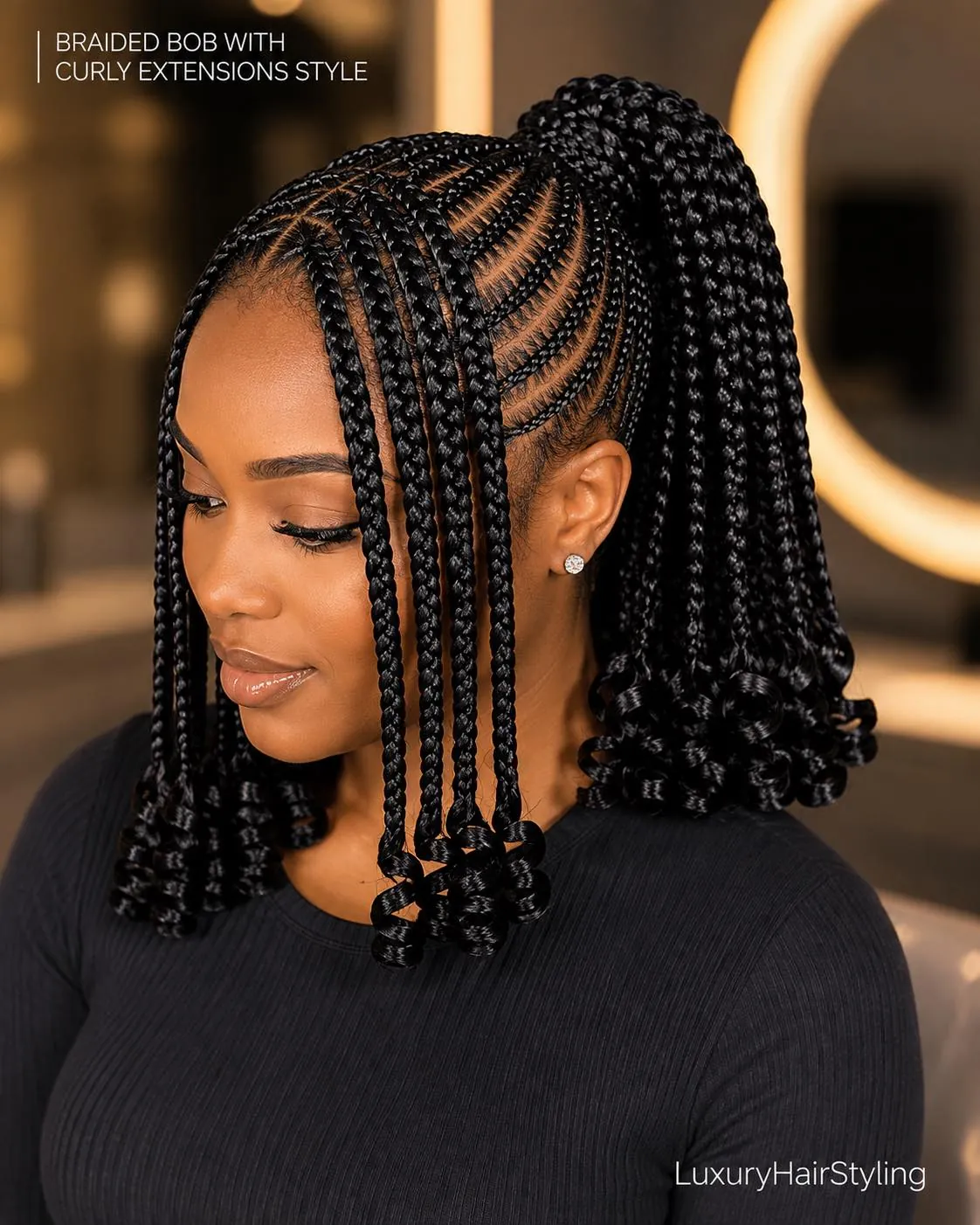
Raised braids meet at the crown, while shorter plaits and curled ends frame the face. This reads more as a half-up braided bob than a full-length ponytail, offering a compact alternative.
Good to know: The short curled ends are part of the visible shape, not a long flowing ponytail.
Center Braid Low Ponytail
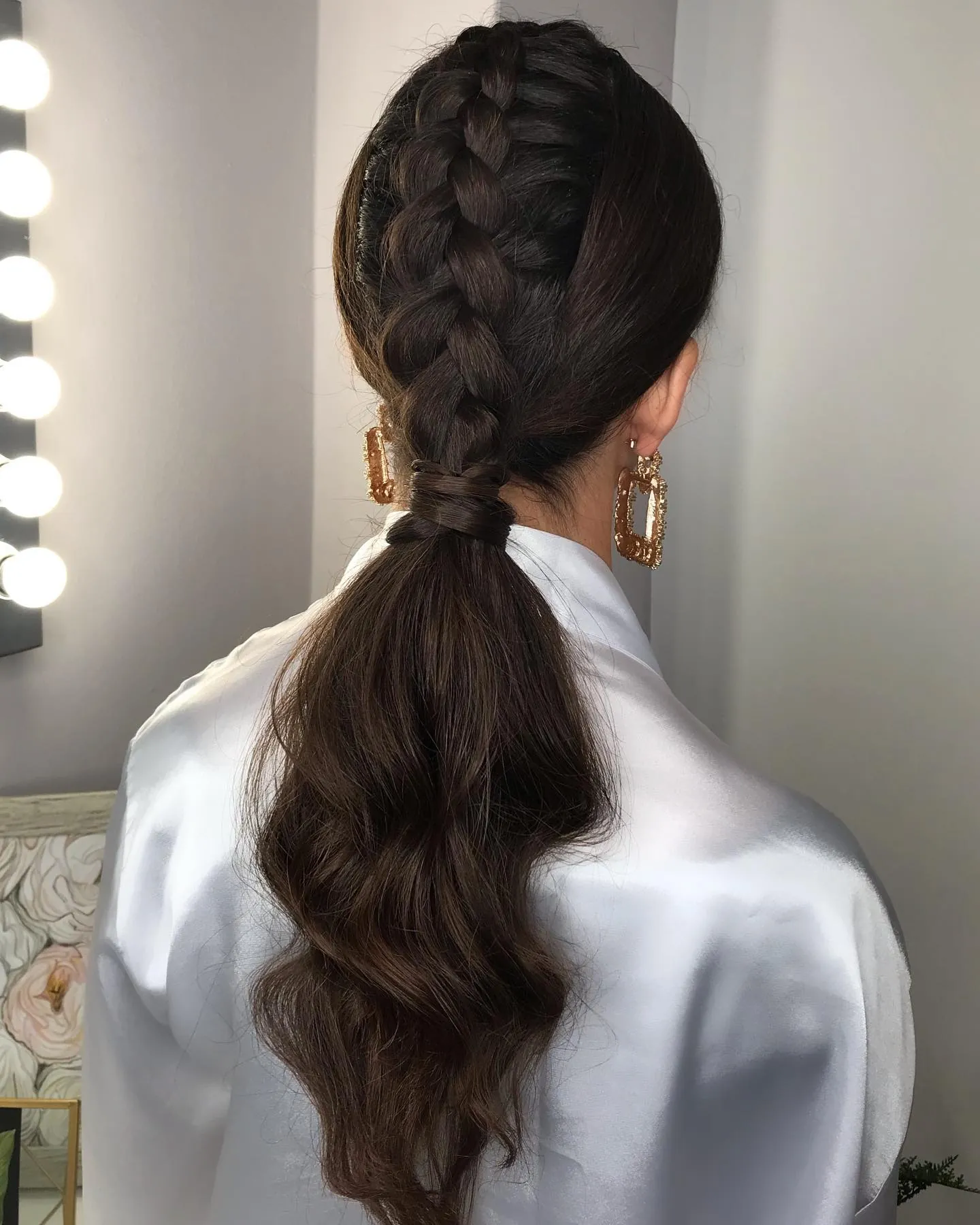
One broad braid travels down the centre of the head into a low, wavy ponytail. Its symmetrical placement draws attention to the woven crown while the loose lengths soften the finish.
Sleek Low Braided Ponytail
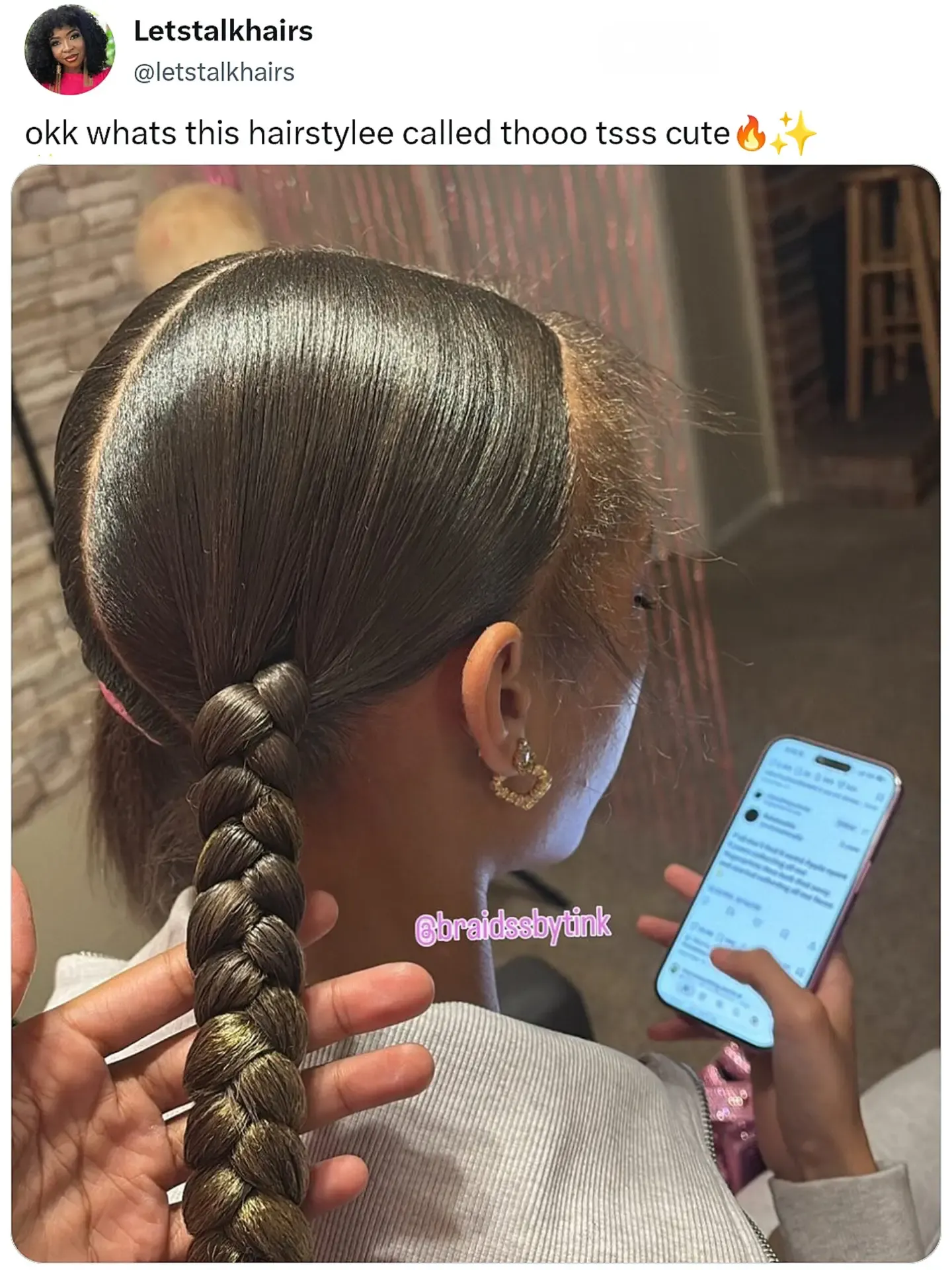
A smooth low ponytail begins at the nape and continues as one thick, rounded braid. Here the texture starts below the tie rather than being built into the scalp.
Pro tip: Check the braid thickness from the back, because it becomes the main feature of this minimal style.
Side-Parted Braids With Curls
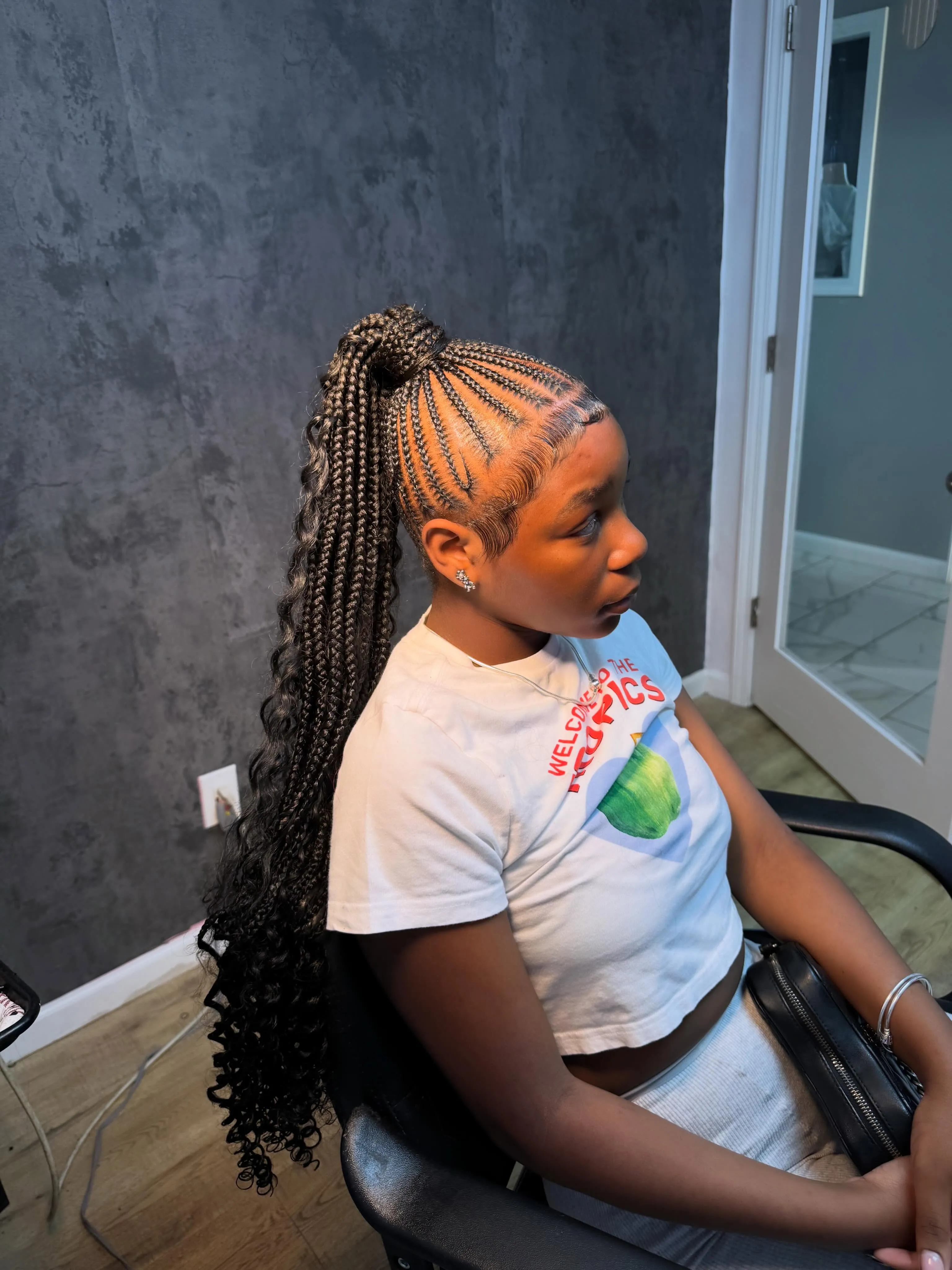
Diagonal braided rows guide the eye towards a high ponytail of small braids and curled lengths. The curls break up the long silhouette so it does not look uniformly plaited.
Lattice Braids With Long Plait
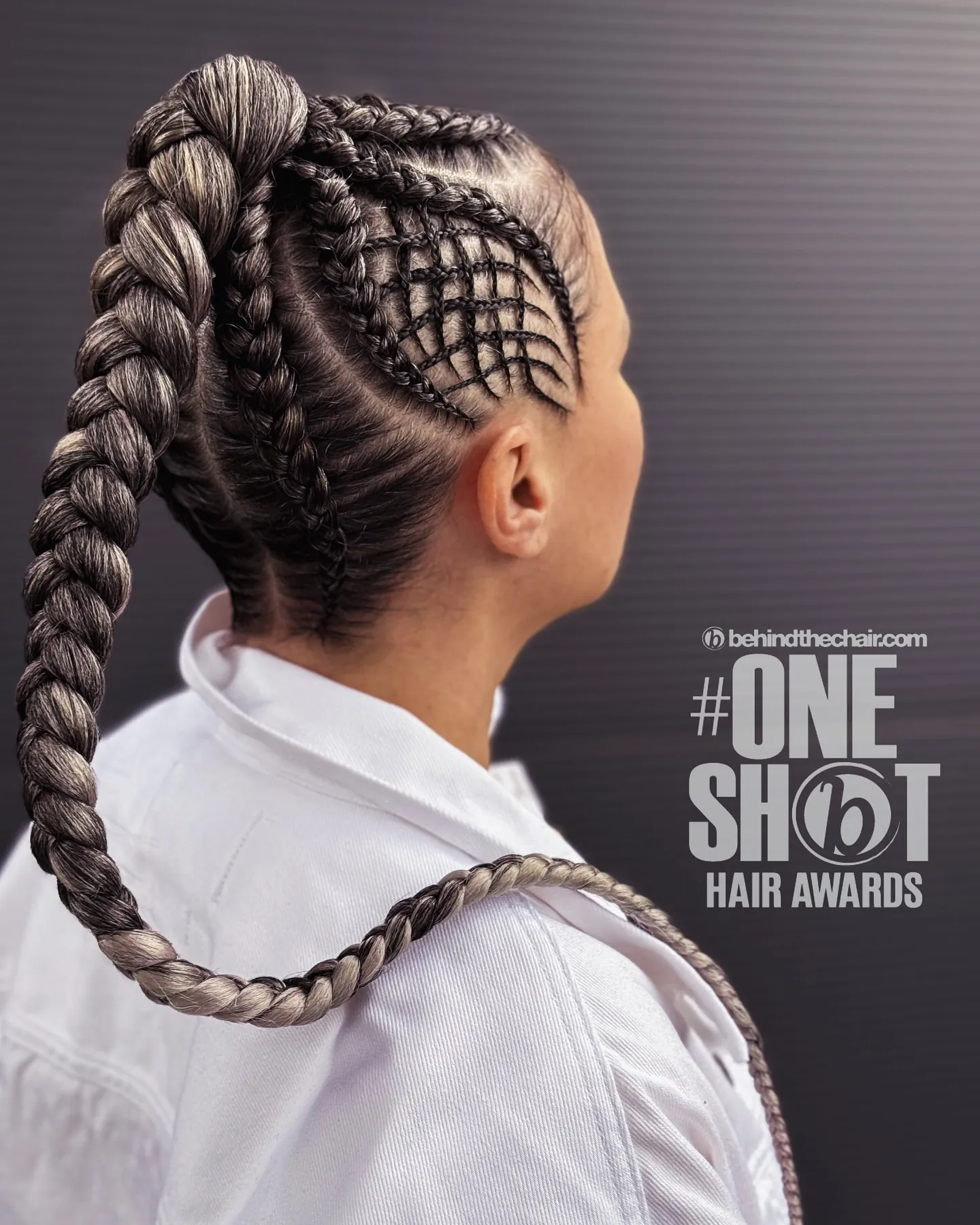
A crisscross pattern of narrow braids fills one side of the scalp before joining an extra-thick ponytail plait. The smaller rows create contrast with the bold braid down the back.
Ask your stylist: Bring a side-view reference to show the crossed parting pattern as well as the thick tail.
Copper Braids High Ponytail
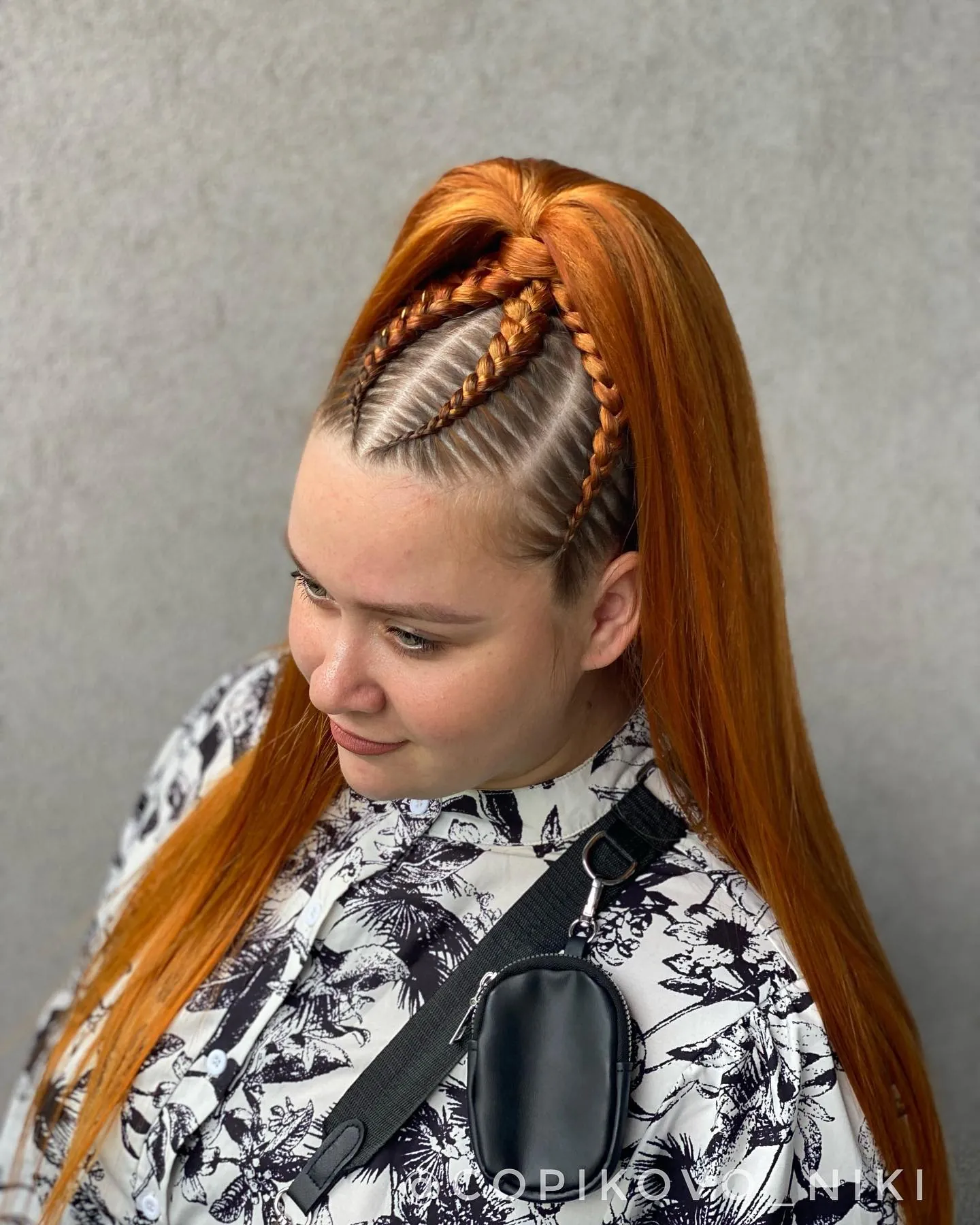
Two slim braids frame the top section of a high, straight copper ponytail. Their placement draws attention upwards while leaving most of the bright lengths smooth.
Sleek Side Braid Jumbo Plait
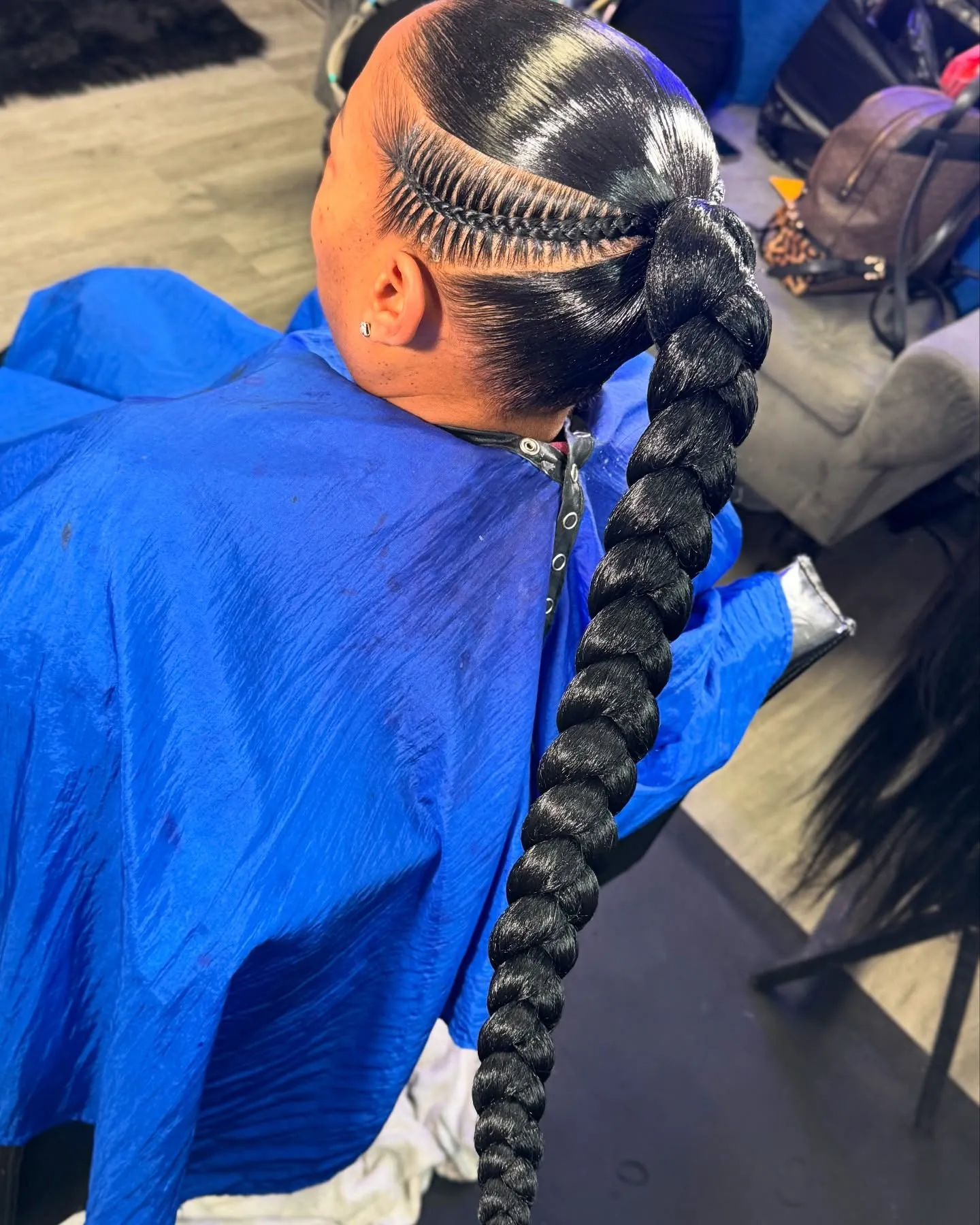
A narrow braided strip runs above the ear into a sleek, low ponytail with a chunky plait. The slim side detail contrasts with the large sections through the tail.
Pro tip: Keep the side section narrow if you want the long plait to remain the strongest feature.
Cornrowed High Braid Ponytail
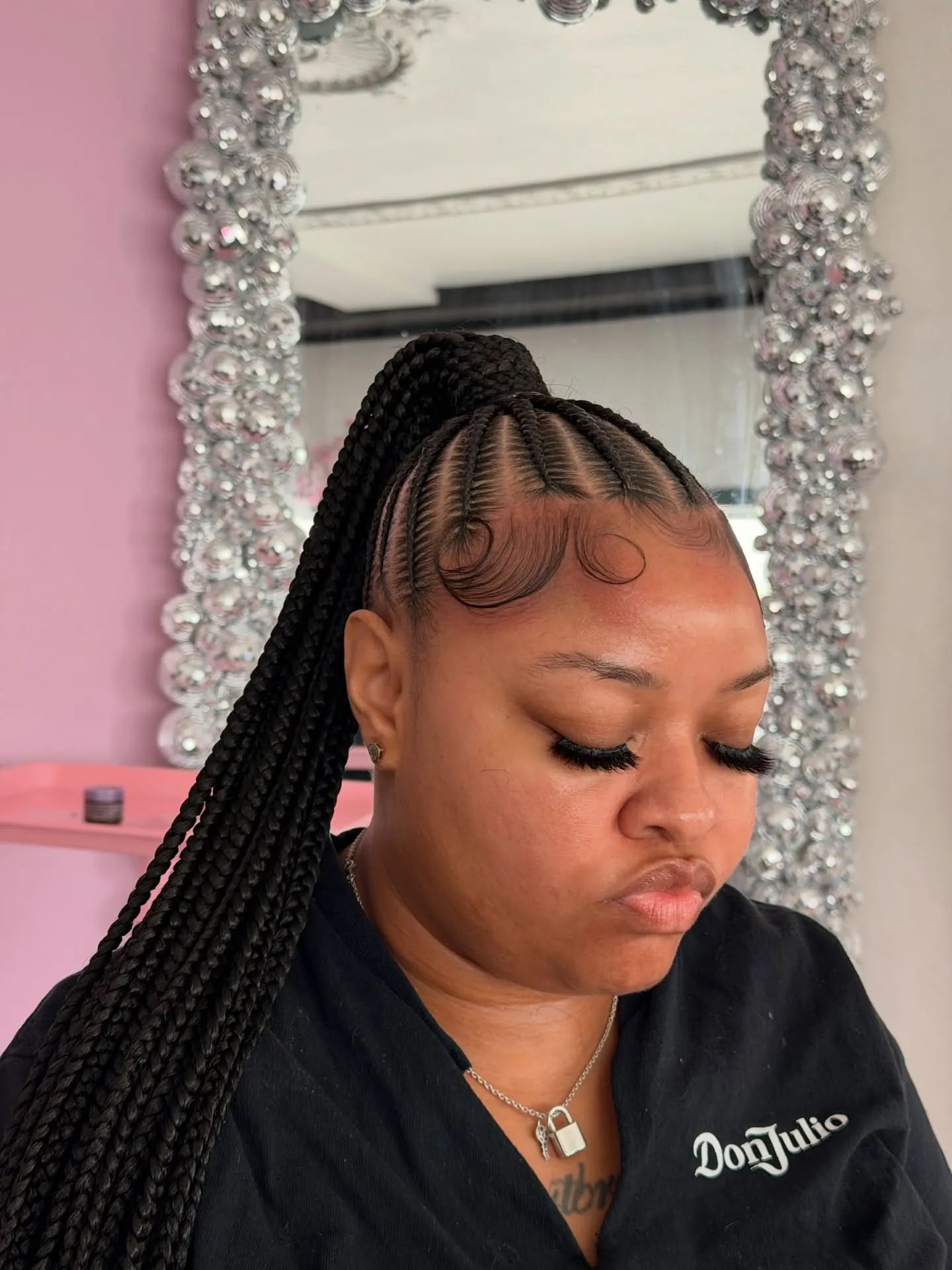
Parallel cornrows travel back into a high ponytail made from many fine braids. Curved baby hairs sit along the forehead, adding a separate detail to the neat rows.
Curly Ponytail With Front Braids
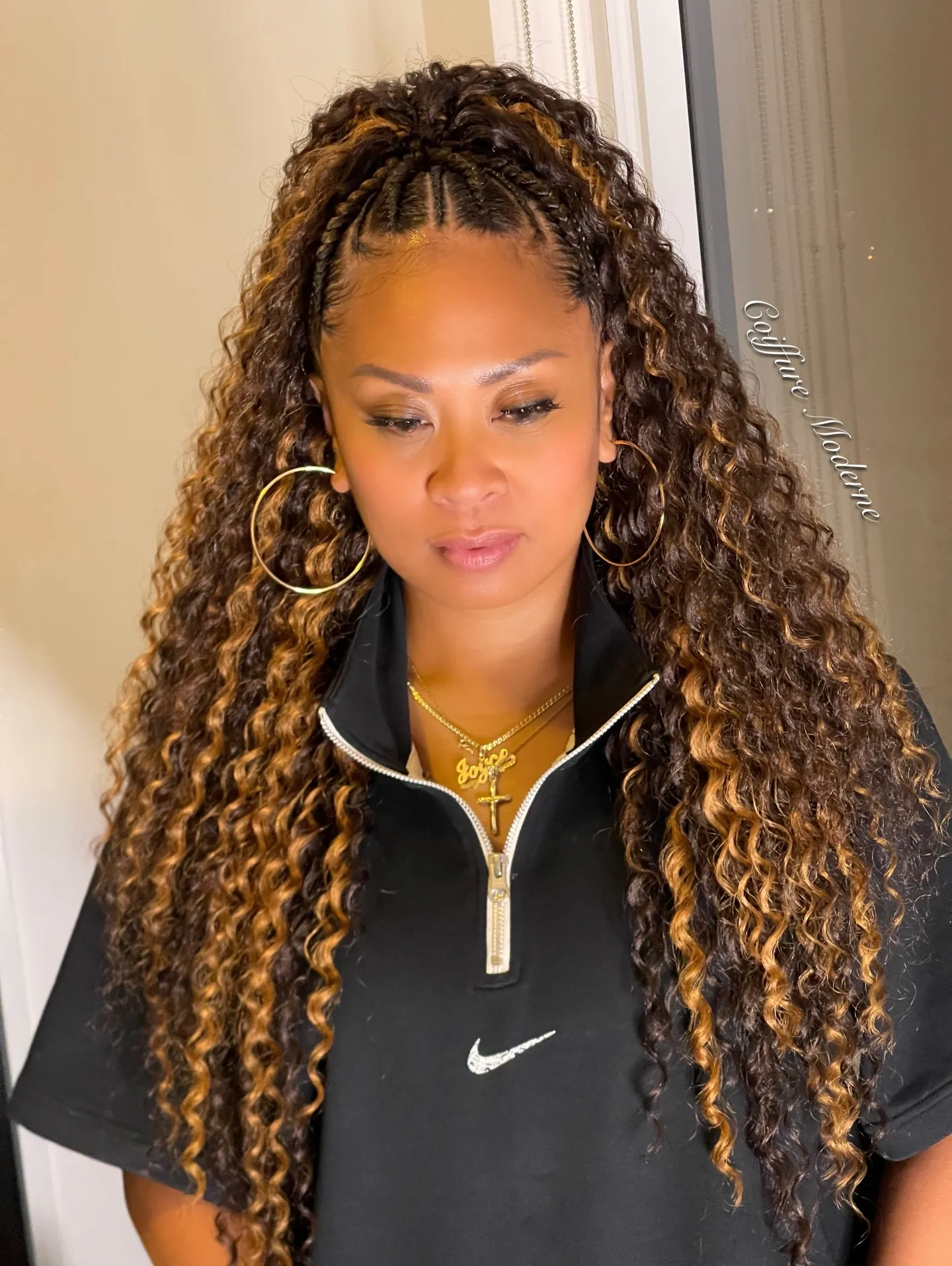
Small braids frame the front of the head and gather into a high mass of long curls. The visible brown highlights pick out individual ringlets and make the texture more prominent.
Style note: Bring the curls forward over both shoulders if you want the volume visible from the front.